
By Thomas Welch
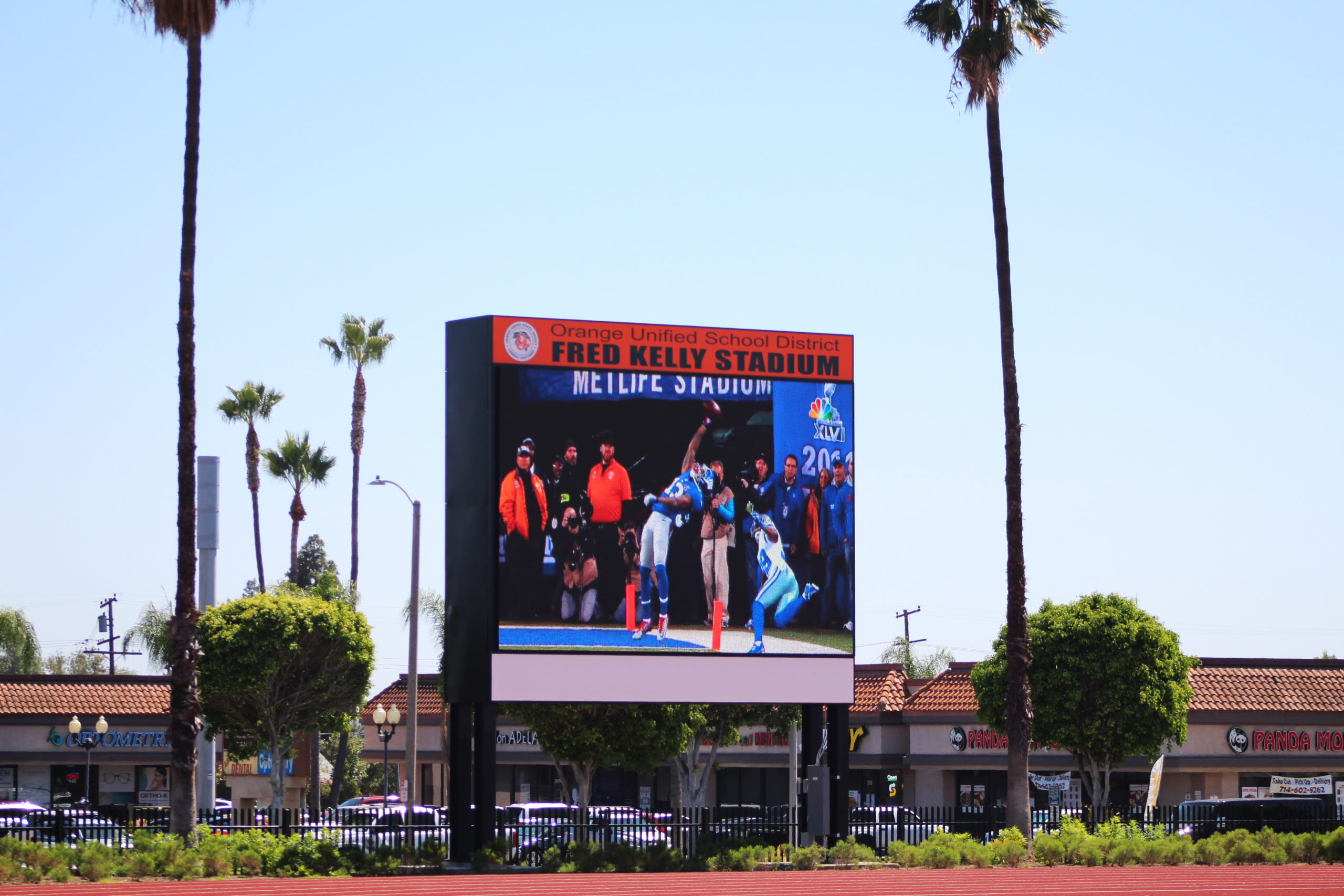
A video board is a large, full-color LED display that shows live video, replays, graphics, scores, and sponsor content at a sports venue. You may also hear it called a video display board or LED video board. Unlike a traditional scoreboard, which shows information in fixed digits, a video board can display almost anything, which is why more high schools, colleges, and community venues are adding them.
What Is a Video Board in Sports?
A video board is made of thousands of tiny LED pixels arranged in panels. Each pixel combines red, green, and blue LEDs, so the board can produce full-color images and video. A computer and control software send content to the board: a digital scoreboard layout, a live camera feed, an instant replay, a player introduction, or a sponsor ad.
Video boards appear in football stadiums, baseball fields, basketball gyms, hockey arenas, and multi-sport complexes. They can stand alone, sit above or beside a traditional scoreboard, or run as a long, narrow ribbon board along a fascia.
Video Board vs. Scoreboard: What’s the Difference?
| Traditional scoreboard | Video board | |
|---|---|---|
| Display | Fixed LED digits and indicators | Full-color LED pixels |
| Content | Clock, score, sport-specific stats | Anything: scores, video, replays, graphics, ads |
| Sponsors | Static sponsor panels | Rotating digital ads and sponsored moments |
| Operation | One scorekeeper with a controller | Scorekeeper plus software and a content operator |
Many schools choose a hybrid: a traditional scoreboard for always-visible game information plus a video board for fan engagement. Our guide to LED video scoreboards vs. traditional scoreboards compares the options in detail.
How Does a Video Board Work?
- LED panels form the display surface. Their pixel pitch (the distance between pixels, in millimeters) sets the resolution.
- A video processor receives the signal from a computer and maps it to the board’s exact pixel dimensions.
- Control software lets operators run scoreboards, playlists, live cameras, and sponsor rotations. Fair-Play Fusion can drive video boards, ribbon boards, and scoreboards from one computer.
- Inputs such as scoreboard consoles, cameras, and stat feeds bring live game data onto the board.
What Is Pixel Pitch?
Pixel pitch is the most important video board specification. A smaller pitch packs pixels closer together for a sharper image, which matters when viewers sit close. A larger pitch suits viewers farther away.
- Indoor video boards are viewed up close, so they use small pitches. Fair-Play indoor LED displays include 1.9mm, 2.5mm, and 3.9mm options.
- Outdoor video boards are viewed from the stands and across the field. Fair-Play outdoor LED displays include 6mm, 10mm, and 16mm options.
For outdoor stadiums, our article on 10mm vs. 16mm outdoor LED displays explains how pitch affects sharpness and readability.
Why Schools Add Video Boards
- Sponsor revenue: a video board can rotate many sponsors and run sponsored moments, such as a “touchdown” or “3-pointer” graphic. See video scoreboard sponsorship.
- Fan experience: replays, player introductions, and crowd prompts make games more engaging.
- Recognition: honor seniors, champions, and academic achievers.
- Student learning: student media crews gain hands-on production experience.
- Year-round use: announcements and event information on non-game days.
Types of Video Boards
- Main video boards for stadiums and arenas, often paired with a scoreboard.
- Center-hung displays above a basketball court or hockey rink.
- Ribbon and fascia boards along balconies, sidelines, or scorer’s tables.
- Hybrid scoreboards that combine fixed digits with an integrated video display.
How to Choose a Video Board for Your Facility
- Measure viewing distance to choose the right pixel pitch.
- Decide on size and placement based on sightlines and structure.
- Plan the content and staffing: who will run the board on game day?
- Check integration with your existing scoreboard console and stat systems.
- Build a sponsorship plan to help fund the project. Review what drives scoreboard cost before you request a quote.
Video Board FAQs
Can a video board show the score?
Yes. A video board can display a digital scoreboard layout. Many schools still pair it with a traditional scoreboard so game information stays visible while the video board shows replays and ads.
Can I add a video board to my existing scoreboard?
Often, yes. Many projects add a video display above or beside an existing scoreboard in a later phase.
Who runs the video board during games?
A volunteer, staff member, or student crew, using control software. Fair-Play Fusion is designed for rotating crews and includes phone-based remotes for individual roles.
Explore Fair-Play Video Boards
Fair-Play designs indoor and outdoor LED video displays for high schools, colleges, and community venues. Explore our indoor LED displays and outdoor LED displays, then contact a Fair-Play dealer to plan a video board for your facility.