
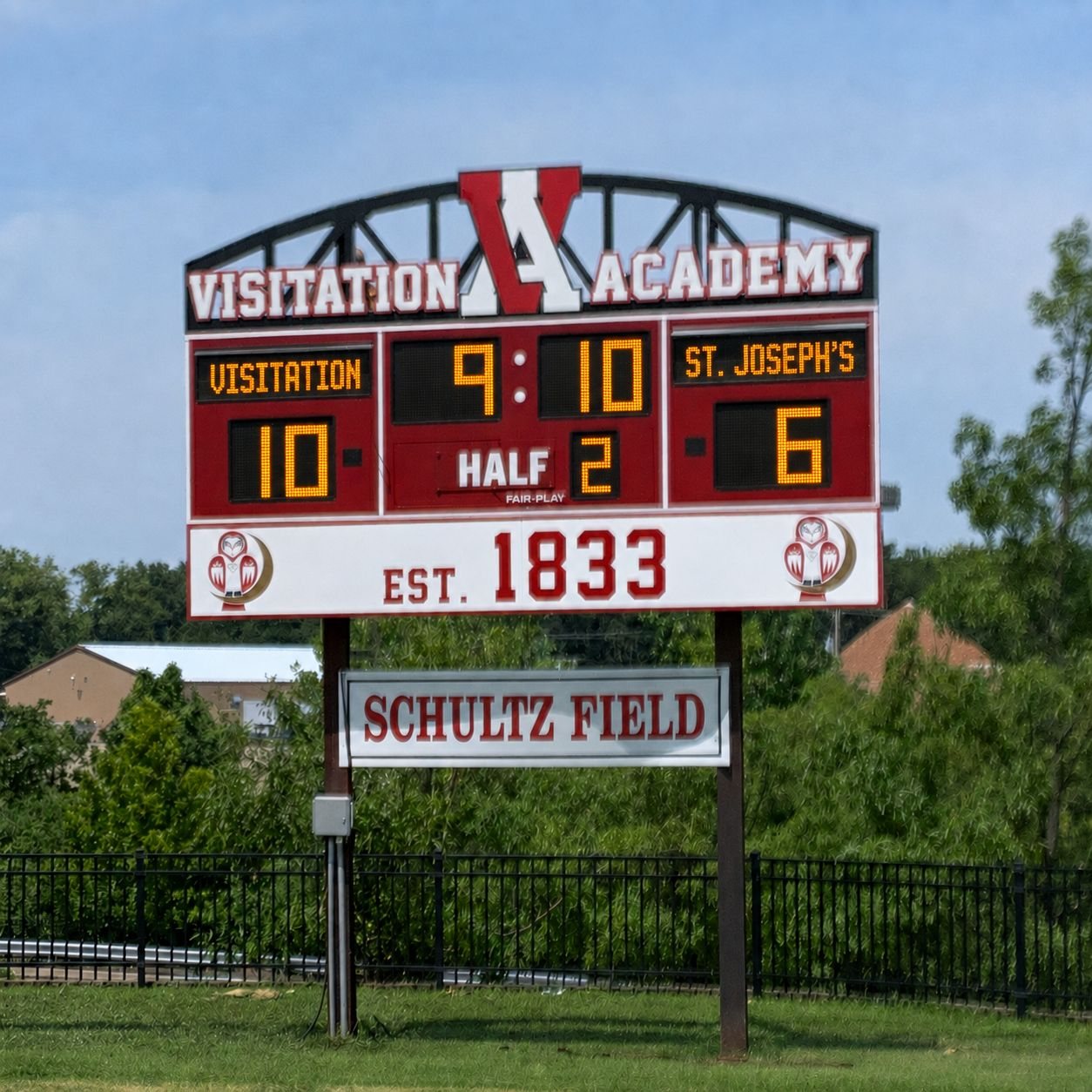
The right scoreboard helps players, coaches, and fans follow the action. For athletic directors and facility managers comparing manual vs. digital scoreboards, the decision starts with what your games require.
Manual boards provide basic scorekeeping with little equipment. Digital systems offer electronic score updates and, depending on the model, integrated clocks and other game information. Video displays add opportunities for graphics, entertainment, and sponsor messages. Understanding these differences helps you choose equipment that fits your venue, operators, and budget.
What Is the Difference Between Manual, Digital, and Video Scoreboards?
Manual scoreboards use flip cards, movable numbers, or markers that someone changes by hand. They generally need no electricity for scoring. These boards can work well for practices, small competitions, and programs that need a simple way to show points.
Fixed-digit digital scoreboards use illuminated numbers and indicators to display information in designated positions. Depending on the configuration, they can show scores, time remaining, periods, fouls, penalties, or other sport-specific details. An operator manages these functions through compatible controls.
Video scoreboards use an LED screen to show scoring layouts alongside graphics, animations, sponsor messages, or video. Those capabilities depend on the display, software, and connected production equipment. A fixed-digit LED scoreboard does not automatically include video functionality.
Portability is a separate consideration. Portable sports scoreboards include both manual and electronic models. Compare weight, transport equipment, storage space, setup needs, and power requirements before choosing one for shared courts or fields.
Compare Game-Day Operation and Timing
A manual scoreboard operator must physically change the displayed score after each scoring play. That process is straightforward, but the operator needs a clear view of play and access to the board. Missing a point or changing the wrong number still requires a correction.
Digital controls let an operator update information from a scoring table or another suitable position. Compatible wireless controls can reduce the need for a data cable between the controller and scoreboard. Wireless control does not mean the board itself operates without power.
For timed sports, consider how staff will manage the game clock, shot clock, penalties, and horn. A basic manual board usually requires separate timing equipment. An appropriately equipped digital system can bring several functions into the scoring workflow.
Both approaches depend on attentive operators. Electronic controls do not automatically recognize every scoring play or prevent incorrect entries. Ask for a demonstration that covers starting and stopping clocks, correcting scores, and preparing for the next game.
Choose a Display Fans Can Read
The easiest scoreboard to read is one sized and positioned for the people using it. A small manual board may be perfectly adequate beside a practice court. The same board may be difficult to follow from distant bleachers.
Start with the farthest intended viewing location. Evaluate digit height, contrast, mounting position, and obstructions. Check the view from team benches and different seating areas, including locations away from the center of the display.
Outdoor facilities should account for direct sunlight and changing conditions throughout the day. Indoor facilities need to consider reflections, windows, and overhead lighting. Bright LED digits can support visibility, but appropriate brightness and placement matter.
When comparing an LED scoreboard vs. video scoreboard, review the size of the score within the planned screen layout. A large video display can still show numbers too small to read if graphics and advertisements occupy too much space.
Compare Purchase and Ownership Costs
Manual scoreboards generally cost less to purchase and maintain because they have fewer components. However, a useful comparison includes the full setup each program needs. Separate clocks, storage, transport equipment, and replacement number cards may also belong in the budget.
Electronic scoreboard cost depends on size, sport, display functions, controls, and installation conditions. Fixed-digit boards and full video systems represent different purchases, so request itemized quotes for configurations that meet the same requirements.
For permanent installations, account for structural work, mounting, electrical service, and control connections. Ask whether the quote includes freight, installation, testing, operator training, and any required software licenses or subscriptions.
Review ongoing service as well. Confirm warranty coverage, replacement-part availability, service access, and potential repair expenses. For video systems, include the staff time and equipment needed to prepare content. Sponsorships may help fund a display, but revenue depends on local demand, advertising sales, and program management.
When Should Schools and Recreation Facilities Upgrade?
A manual board can remain a practical choice when games need only a visible score and spectators are close to the action. It also makes sense for some practices and temporary playing areas.
An upgrade becomes worth considering when fans cannot read the score, operators struggle to manage separate timers, or the facility hosts competitions with more demanding scoring needs. Frequent equipment problems can also prompt a review.
Digital scoreboards for schools should reflect the sports using the facility. Fair-Play’s multi-purpose scoreboards offer configurations for shared fields, including options with changeable captions and integrated clocks. Confirm which functions each proposed model supports.
Schools seeking replays, team introductions, or rotating sponsor content may also consider LED video displays. A fixed-digit scoreboard paired with video can keep scoring information visible while providing a separate area for entertainment. Discuss phased upgrades early so mounting, power, and control plans support the intended expansion.
Plan Installation, Training, and Long-Term Support
Bring facilities staff into the selection process before approving a permanent system. Qualified installers should review mounting conditions, structural support, electrical requirements, and safe service access. Those details can affect both project cost and scheduling.
For portable equipment, review safe movement, stable placement, cable routing, and storage. Confirm how electronic units receive power and what staff must check before play begins.
Schedule system testing and operator training before the first competition. Volunteers should practice routine scoring, corrections, clock operation, and basic troubleshooting. Keep operating instructions accessible and establish a backup procedure for equipment problems.
Long-term support deserves attention during purchasing. Ask who handles service calls, how replacement parts are obtained, and what assistance is available when staff members change.
Find the Right Scoreboard with Fair-Play
Fair-Play has provided sports scoring solutions since 1934, serving programs from community recreation to major athletic venues. Its scoreboard and display options help organizations match game information, visibility, and presentation needs to their facilities.
Our authorized dealer network supports local installation and service across the country. Share your sports, viewing distances, operating needs, and budget so the proposed equipment addresses the way your venue works.
Start with Design Your Scoreboard to explore your options, then work with Fair-Play to confirm the configuration, installation requirements, warranty coverage, and support for your project.