
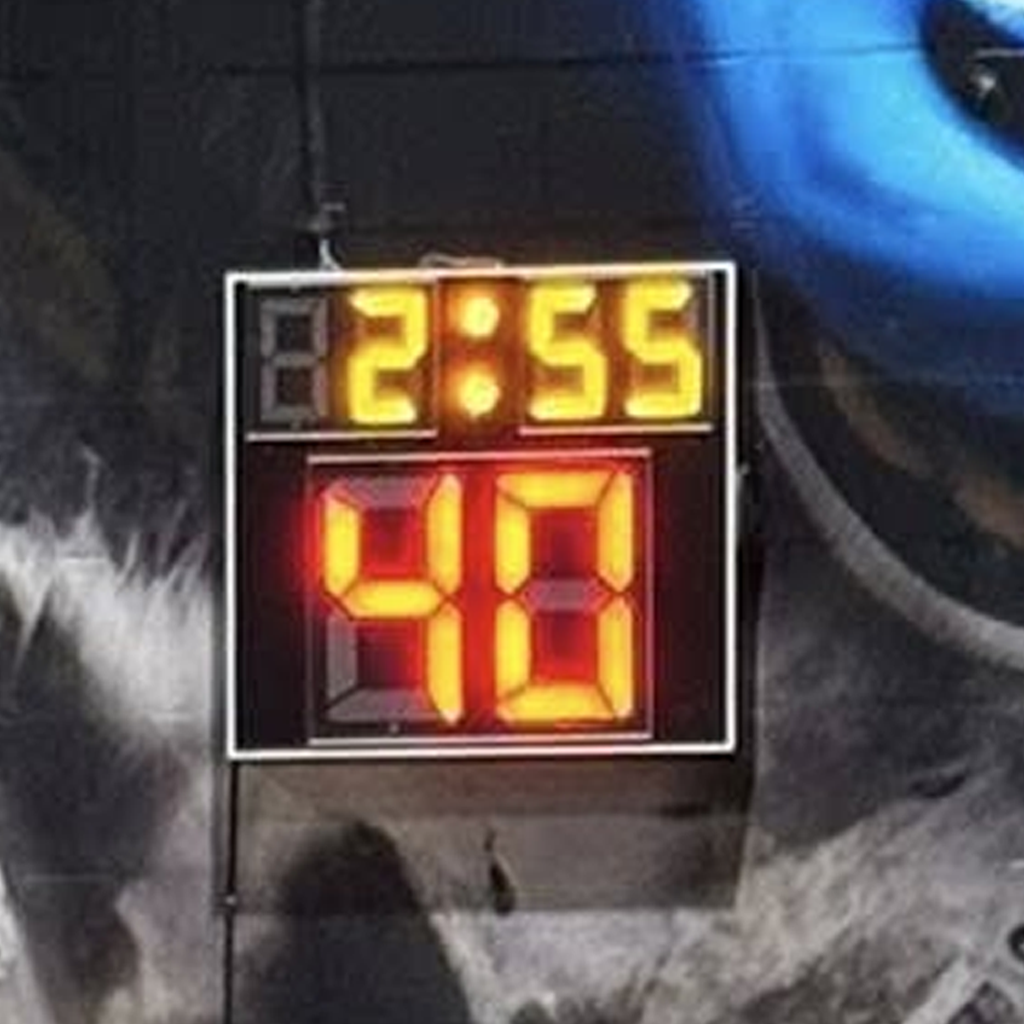
What Is a Shot Clock in Basketball?
A shot clock is a timer that limits how long a basketball team can control the ball before it must attempt a shot. It’s separate from the game clock, which tracks the time left in the quarter or half. The shot clock counts down during each possession and helps keep the game moving at a fair, watchable pace.
The shot clock starts when a team gains control of the ball. In most cases, the team must attempt a shot that hits the rim before the clock reaches zero. If not, officials call a shot clock violation and the other team gets possession. The NBA uses a 24-second shot clock, NCAA basketball uses a 30-second clock, and high school rules vary by state association. Many high school programs that have adopted shot clocks use a 35-second clock.
For schools and facilities, the shot clock is also part of the larger game-day system. Fair-Play shot clocks are built for reliable timing, bright LED visibility, and simple control with basketball scoreboards.
Why Shot Clocks Matter for Modern Basketball
Shot clocks help prevent stalling. Without a possession clock, a team with the lead can hold the ball for long stretches and slow the game down. A clock forces each team to run offense, move the ball, and create a quality shot within a set time.
That faster pace makes games more exciting for fans and more useful for player development. Athletes learn to attack, defend, rebound, and respond under pressure, while coaches manage late-clock situations that mirror college play and March Madness.
More high school programs are adding shot clocks to basketball scoreboards as state rules change. This helps prepare athletes for college basketball and supports a modern gym with updated scoreboards, video displays, and scorer’s tables.
Types of Shot Clock Systems
Shot clock systems are built for different sports, facility layouts, and installation needs. Many shot clocks are installed above or near the backboard so the countdown can be easily seen. Some gyms use wall-mounted shot clocks near each end of the court, while larger venues may connect shot clocks to a full scoreboard and digital displays.
Indoor shot clocks are used in gyms, arenas, recreation centers, and fieldhouses, while outdoor systems may be needed for open-air courts or multi-use athletic spaces. Indoor systems should be easy to read under gym lighting, while outdoor displays need strong brightness, durable construction, and clear visibility in changing light. Buyers should also consider LED digit size, viewing distance, mounting location, and horn placement.
Facilities can also choose wired or wireless shot clock systems. Wireless systems may reduce new cable runs, while wired systems can fit venues with existing infrastructure or larger scoreboard control setups.
Fair-Play shot clocks are designed to work with Fair-Play scoreboard controllers and timing equipment. Product options include ST-1405-4, ST-1408-4, ST-1425-4, ST-1428-4, and ST-1425-3S-4, along with related timing displays such as SG-1450-4 for shots-on-goal applications.
Shot Clock Rules by Level of Play
Rules vary by league, so schools and facilities should match equipment and procedures to the level of play they host. In the NBA, the 24-second shot clock resets after several situations, including a change of possession. It may also reset to 14 seconds in some offensive rebound and frontcourt possession situations.
NCAA men’s and women’s basketball both use a 30-second shot clock, though reset and administrative rules can vary by rule set. Game officials and scorer’s table operators follow the current NCAA procedures for possession changes, fouls, rebounds, and other live-ball situations.
High school basketball rules are handled through NFHS guidance and state association adoption. Some states use a 35-second shot clock. Others may not require one yet. A shot clock purchase should account for current rules, possible future mandates, operator training, and scoreboard compatibility.
When Schools and Facilities Should Upgrade Their Shot Clocks
A facility should consider a shot clock upgrade when the display is hard to read, the horn is unreliable, controls are difficult to operate, or the system no longer matches game rules.
LED upgrades can improve readability, reduce maintenance needs, and connect with newer scoreboards and control consoles.
Many schools plan shot clock upgrades during larger facility projects. Common triggers include gym renovations, bond funding, athletic investments, state rule changes, sponsorship interest, and a new scoreboard purchase. Reviewing Fair-Play’s project gallery can also help athletic directors and facility teams see how timing displays, scoreboards, and other game-day systems work together in real venues.
Fair-Play can help facilities plan shot clock upgrades, coordinate installation, and keep their basketball timing systems ready for future seasons.
Choosing the Right Shot Clock System for Your Facility
Choosing a shot clock starts with the venue. Court size, viewing distance, mounting location, sport level, and scoreboard compatibility all affect the right fit.
Ease of use is also important. During live play, operators need controls that are simple to manage during resets, possession changes, and end-of-period situations. Clear displays, reliable timing, and smooth scoreboard integration help keep the game moving without confusion at the scorer’s table.
Fair-Play brings experience dating back to 1934, along with a nationwide network of dealers for local sales, installation, and service support. Explore Fair-Play Shot Clocks to compare models that work with Fair-Play basketball scoreboards, then contact a Fair-Play dealer for product information.
Shot Clock FAQs
What is the purpose of a shot clock in basketball?
The purpose of a shot clock is to keep the game moving by limiting how long a team can possess the ball before attempting a shot. This creates a faster, more competitive game and prevents stalling by the offense.
Do high schools use shot clocks in basketball?
Many high schools are adopting shot clocks as state athletic associations update their basketball rules. Shot clock requirements vary by state, but adoption continues to grow to better align high school play with college and professional basketball.
How long is a basketball shot clock?
Shot clock lengths depend on the level of play. The NBA uses a 24-second shot clock, NCAA men’s and women’s basketball use 30 seconds, and high school shot clock rules vary depending on the governing athletic association for 35-second shot clocks.
Can shot clocks be connected to a scoreboard system?
Yes. Modern shot clocks are commonly integrated with scoreboard systems and scoring controls, allowing operators to manage game timing and shot clocks together for smoother game-day operation.
When should a school or facility replace its shot clocks?
Schools and facilities should consider replacement when displays are difficult to read, systems have reliability issues, rules require upgrades, or they are modernizing their gymnasium or basketball venue with newer scoreboard technology.