
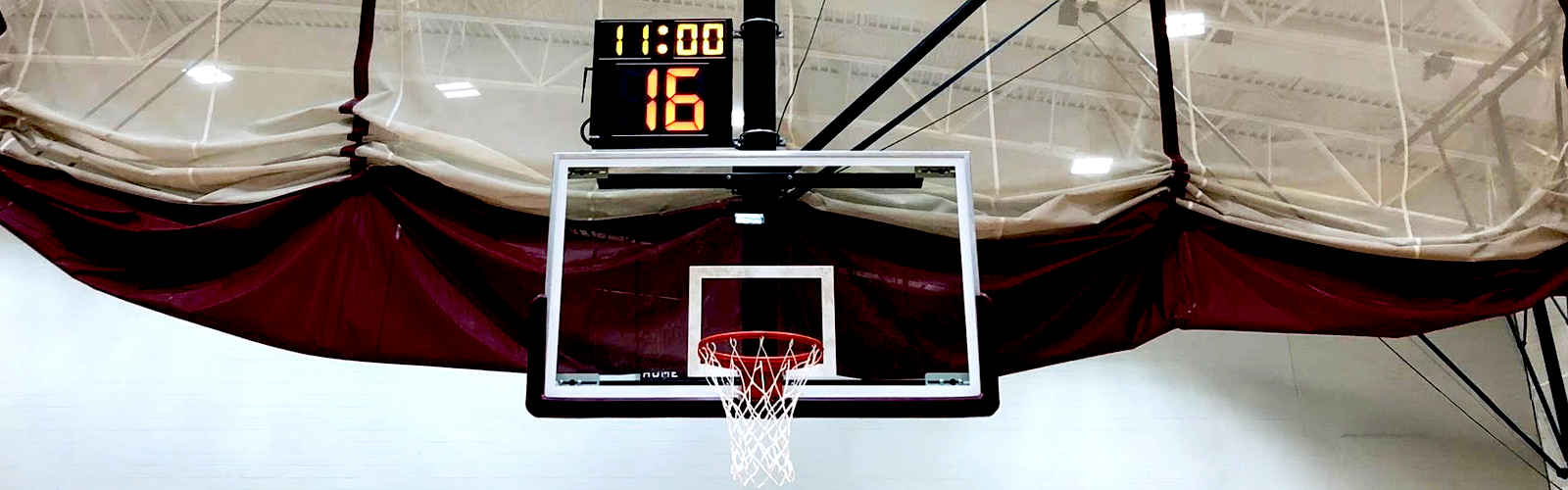
A shot clock is more than a timer above the backboard. It helps control the pace of basketball games, supports officials, improves player decision-making and gives fans a clearer view of the action. For schools and athletic facilities, the right shot clock system can also make a gym feel more modern, organized and ready for higher-level competition.
This shot clock buying guide explains what athletic directors, facility managers and school decision-makers should know before comparing systems. The best choice depends on your level of play, existing scoreboard setup, installation needs and long-term plans for your facility.
What to Know Before Buying a Shot Clock
A shot clock is a countdown timer that limits how long a basketball team can control the ball before attempting a shot. If you need a fuller explanation, Fair-Play’s guide to what is a shot clock? explains the basic rules and purpose.
Shot clocks are becoming more important in high school basketball, college basketball and competitive athletic facilities. As more leagues adopt shot clock rules, schools are upgrading gyms to meet new requirements and improve the game-day experience.
Before shopping for shot clocks, start with the basics. What type of facility do you operate? What level of competition do you host? Do you already have a compatible scoreboard system? Will the shot clock be part of a larger gym renovation or a stand-alone upgrade?
Budget also matters, but it should not be the only factor. A low-cost system that is hard to see, difficult to operate or incompatible with your scoreboard can create more problems later. Reliable equipment is especially important for schools and facilities that host frequent games, tournaments and community events. Consider the shot clock an investment in your facility, something that can heighten the experience for fans, players, coaches, and even officials,
A shot clock system should fit the way your facility runs today while supporting future upgrades. For many buyers, that means choosing equipment that works with existing basketball scoring systems, LED displays and game-day controls.
Types of Shot Clock Systems and Features
Not every facility needs the same type of shot clock. A small school gym may need a standard indoor system, while a larger venue may need a more advanced setup with scoreboard integration, brighter LED displays or multiple viewing angles.
Standard indoor shot clocks are often a good fit for school gyms and recreation facilities. They provide the basic possession countdown players, coaches and officials need. Options such as the ST-1405-4 and ST-1408-4 are examples of shot timer systems built for indoor basketball use.
LED shot clock systems offer strong visibility and are useful in gyms where lighting, seating distance or viewing angles make readability a concern. Bright, clear digits help players react quickly and help fans follow late-possession situations. Facilities planning broader display upgrades may also want to compare indoor led displays as part of a larger game-day improvement plan.
Integrated systems are designed to work with scoreboards and scoring controls. This can simplify game operation because staff can manage scoring, game time and shot clock timing from a connected setup. Models such as the ST-1425-4 and ST-1428-4 may be relevant for facilities that need more advanced shot clock features.
Some venues may also need three-sided displays or specialty systems that improve visibility from several areas of the court. The SG-1450-4 is another product buyers may review when comparing timing and display options for sports facilities.
Important features to compare include LED brightness, digit size, wired or wireless functionality, ease of operation, durability and compatibility with existing equipment. A good shot clock should be easy for table staff to control, clear enough for players to read quickly and tough enough for regular use.
How Much Do Shot Clocks Cost?
Shot clock pricing depends on several factors. Display size, LED technology, wireless functionality, scoreboard integration and installation complexity can all affect the final cost.
A basic shot clock system will usually cost less than an advanced system designed to connect with a full basketball scoreboard setup. However, the lowest upfront price is not always the best long-term value. Schools should also consider maintenance, service support, future compatibility and expected product life.
Installation can also change the budget. A wall-mounted system may have different labor and wiring needs than a backboard-mounted system. A gym with older electrical infrastructure or an outdated scoreboard may need additional planning before installation.
Facilities asking how much do shot clocks cost? should think in terms of total project cost, not just product price. If the upgrade is part of a larger renovation, it may make sense to review Basketball Scoreboards at the same time. Coordinating scoreboard and shot clock upgrades can reduce compatibility issues and create a cleaner system for game-day staff.
For schools, shot clocks are often a long-term facility investment. They support rule compliance, improve operations and help modernize the gym for athletes, fans and sponsors.
Choosing the Right Shot Clock for Your Facility
The right shot clock depends on the facility. A high school gym may need a durable, visible and easy-to-operate system that supports regular basketball games. A college basketball facility may need a more advanced setup with stronger integration, larger displays and higher-capacity game-day controls. A multi-purpose athletic venue may need flexible equipment that can handle several sports and event types.
Visibility should be one of the first priorities. Players should be able to check the clock without losing focus. Officials should be able to track the countdown from normal game positions. Fans should be able to understand the situation from the stands.
Mounting options are another major consideration. Shot clocks may be mounted near the backboard or in other visible areas depending on the facility layout. Buyers should review sightlines, available power, structural support and installation requirements before choosing a model.
Compatibility is just as important. If your facility already has a scoreboard, confirm whether the new shot clock system can integrate with it. If you are planning a larger upgrade, review the full scoring system instead of treating the shot clock as a separate purchase.
Future scalability matters as well. A school may start with a shot clock upgrade because of a new requirement, then later add LED displays, updated scoreboards or sponsor advertising. Reviewing Fair-Play’s project gallery can help buyers see how scoreboard and display systems fit into different types of venues.
Common Mistakes to Avoid When Buying Shot Clocks
One common mistake is choosing a system with poor visibility. If players, officials or fans cannot clearly read the display, the shot clock will not do its job. Digit size, LED brightness and placement all matter.
Another mistake is ignoring scoreboard compatibility. A shot clock that does not work with your existing controls can make game operation harder than it needs to be. Before buying, confirm how the system connects, how it is controlled and whether it supports your current or planned scoring setup.
Some facilities also underestimate installation requirements. Mounting location, wiring, power access and structural support should be reviewed before the equipment is ordered. This is especially important for older gyms or renovation projects.
Focusing only on short-term cost can also create problems. A cheaper system may seem attractive at first, but reliability, service and support matter over time. Schools and athletic facilities need equipment that can handle repeated use and be serviced when needed.
Working with experienced sports equipment providers and authorized dealers can help avoid these mistakes. Dealer support can be useful for product selection, installation coordination, compatibility checks and long-term maintenance.
Why Schools and Athletic Facilities Choose Fair-Play
Fair-Play has provided scoring and display solutions since 1934. Today, the company offers shot clocks, scoreboards, video displays and other in-game products for schools, colleges, parks, recreation departments and sports facilities.
Fair-Play systems are built for dependable performance, clear LED visibility and long-term facility use. The company also offers a national network of authorized dealers, giving buyers access to local installation and service support in every state.
For many schools, a shot clock upgrade is part of a broader effort to improve the gym. A modern scoring system can help players, coaches, officials and fans stay connected to the game. It can also support sponsorship opportunities, school branding and a better event experience.
Facilities can review Fair-Play Shot Clocks to compare available systems and features. Buyers who need help choosing the right equipment can also Find a Dealer to request pricing, product recommendations and installation guidance.
FAQs
What should schools look for when buying a shot clock system?
Schools should evaluate display visibility, scoreboard compatibility, installation requirements, durability and long-term support when choosing a shot clock system for their facility.
How do shot clocks integrate with basketball scoreboards?
Many modern shot clocks are designed to integrate directly with basketball scoreboards and scoring controls to improve game-day operation and simplify clock management.
Are LED shot clocks better than traditional shot clock systems?
LED shot clocks typically provide improved visibility, brighter displays, better durability and longer-lasting performance compared to older shot clock systems.
Can schools upgrade shot clocks without replacing their entire scoreboard system?
In many cases, schools can upgrade their shot clocks while keeping their existing scoreboard system, depending on compatibility and facility setup.
Why do athletic facilities work with authorized shot clock dealers?
Authorized dealers help schools and athletic facilities choose the right system, coordinate installation, confirm compatibility and provide ongoing support after the sale.